🌱 Non-Toxic Grocery Guide
Modern food systems are not optimized for human health. They are optimized for:
- Shelf life
- Cost
- Convenience
📖 What This Guide Is
A practical, real-world framework focused on:
- Whole foods
- Ingredient quality
- Minimizing toxic exposure
👤 Who This Is For
This guide is for you if:
- You want to reduce toxic exposure
- You want better food quality without overcomplication
- You want practical grocery decisions
👉 This is not about perfection. It’s about better defaults.
⚡ Quick Start
If You Do Nothing Else:
- Buy whole foods (avoid ultra-processed)
- Prioritize pasture-raised eggs and quality grass-fed, pasture-raised meat
- Replace seed oils with olive oil, butter, or ghee
- Buy organic for high-residue produce
- Store and heat food in glass (not plastic)
- Use non-toxic cookware and cutlery
🧠 Grocery Core Philosophy
The fewer ingredients, the better.
👉 If a product requires a paragraph to describe it, it’s probably not food.
☣️ Toxin Exposure Hierarchy
Focus here first:
- Ultra-processed foods
- Industrial seed oils
- Pesticide-heavy produce
- Plastic exposure
- Additives / preservatives
👉 Focus on reducing the biggest of sources of exposure first.
🧺 Where to Buy
- Local-owned, community markets
- Farmers markets
No local options?
- Use online direct-to-consumer brands
- Prioritize transparency over branding
- Ask: Can I trace where this came from?
👉 If not, assume lower quality.
Large Chain Stores
- Prioritize cost and scale over sourcing transparency
- Use complex global supply chains
- Rely on labeling that may not reflect true quality
👉 Use large chains selectively, not as your default.
🛒 How to Shop (Simple Framework)
1. Shop the Perimeter
Most real food lives on the edges:
- Produce
- Meat / fish
- Dairy
👉 The center aisles are where most ultra-processed foods live.
2. Read Ingredients (Not Marketing)
Ignore:
- “Natural”
- “Healthy”
- “Organic” (on packaged foods without context)
Focus on:
- Ingredient list length
- Ingredient clarity
3. Prioritize Real, Whole Foods
If budget is limited, focus here:
- High-quality meat / animal products
- Fresh, high-residue produce
- Dairy (if consumed)
🍎 Produce
🌿 High Priority Organic
Focus organic here (thin skin / higher pesticide exposure):
- Berries
- Leafy greens
- Apples
- Grapes
- Peppers
🥑 Lower Priority Organic
If organic is out of your budget, these are generally lower priority (thick peel / lower absorption):
- Avocados
- Onions
- Bananas
- Pineapple
💡 Produce Tip:
👉 Prioritize organic where pesticide exposure is highest.
🥬 Produce Best Practices
- Wash all produce
- Peel when appropriate
- Buy seasonal when possible
💡 Produce Washing Tip:
- Follow the EWG's Guide to Washing Produce
🥩 Protein Sources
🥚 Eggs
Egg Quality Ranking
👍 Best → 👎 Worst:
- Pasture-raised (third-party verified)
- Organic
- Cage-free
- Conventional
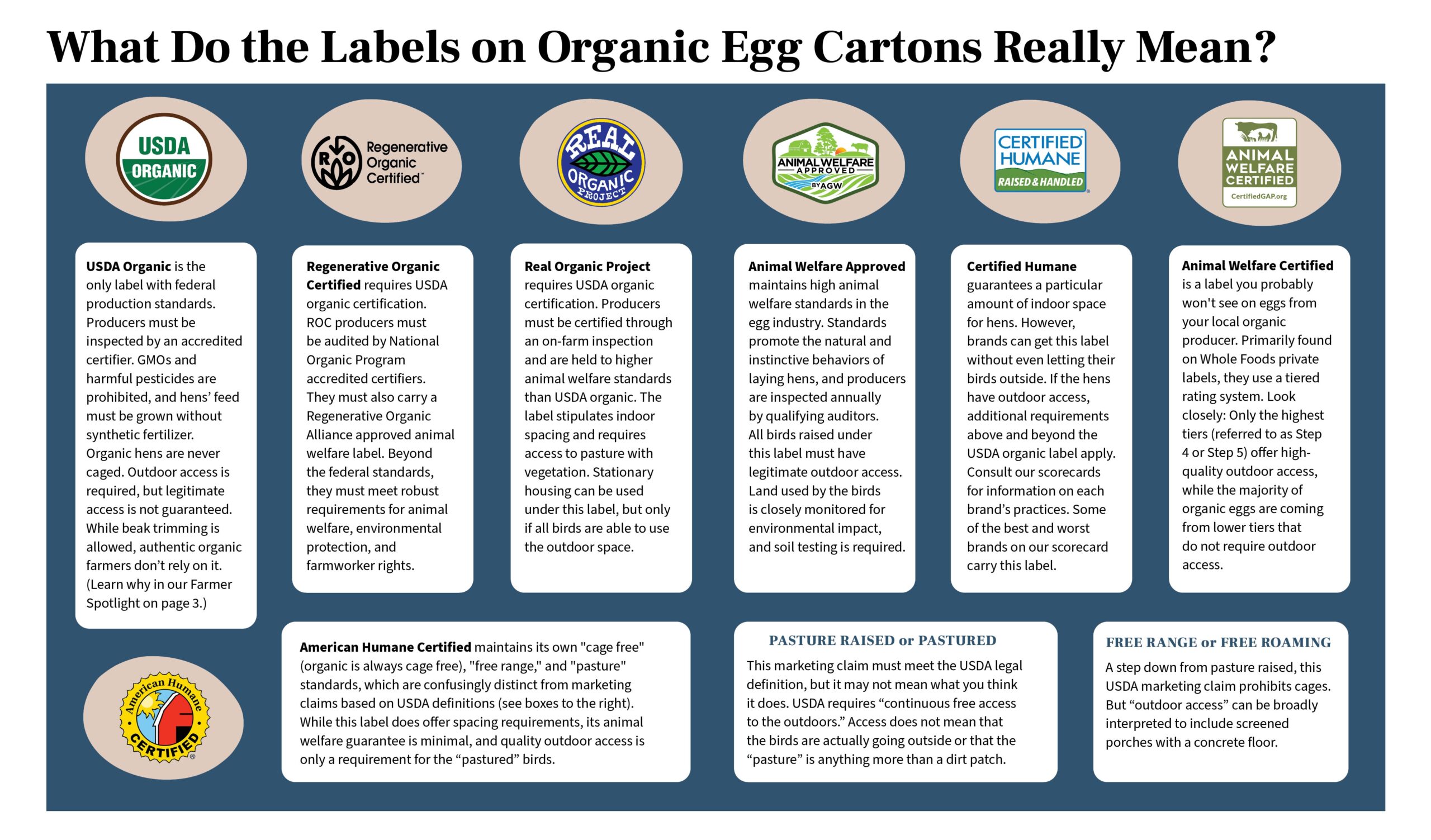
Egg Labels
- Cage-Free: Hens are not kept in cages, but can be kept indoors and overcrowded
- Farm Fresh: All eggs are "fresh." Fresh means not frozen and doesn't mean anything else
- Free-Range: Birds aren't in cages and have outdoor access, but can still be overcrowded and outdoor area can be tiny
- Natural: By definition, an egg is "natural." All shell eggs sold for consumption are natural by USDA. Completely meaningless marketing term
- No Hormones: By US law, chickens that produce eggs can't be given hormones. Meaningless marketing term
- Vegetarian-Fed: Misleading for omnivores and doesn't indicate living conditions
- Organic: hens fed grains grown without synthetic pesticides or GMO. Must have outdoor access, but can still be in confined conditions
- Pasture-Raised: Unregulated unless paired with third-party seal. Certified Humane have standards that require chicken have access to pasture
💡 Egg Tips:
- See the best independently verified egg brands Organic Eggs Scorecard
- See How to Decode Labels on Egg Cartons
🐄 Meat
🥩 Beef Labels
- Grass-Fed: Animals ate grass for at least part of its life. Does NOT always mean grass-finished
- Grass-Fed, Grain-Finished: Animals start on grass but are finished on grain
Beef Quality Ranking
👍 Best → 👎 Worst:
- 100% grass-fed / finished
- Grass-fed (unknown finish)
- Conventional
🐓 Poultry
✅ With Poultry, Look For
- Pasture-raised
⚠️ With Poultry, Caution With
- “Free-range”
- “Cage-free”
⚠️ Poultry Label Reality Check
- “No hormones” → meaningless for poultry (illegal anyway)
- “Antibiotic-free” → more relevant, but still varies
- “Natural” → no real regulatory meaning
👉 Focus on how the animal was raised, not marketing terms.
🛒 High-Quality Meat Sources
- REP Provisions → https://repprovisions.com/
💡 Meat Tips:
- See the best independently verified meat brands Organic Beef Scorecard
- See the best independently verified poultry brands Organic Poultry Scorecard
🐟 Fish
✅ With Fish, Look For
- Wild-caught
⚠️ With Fish, Caution With
- Farmed fish (variable quality)
💡 Fish Tip:
- Check for the MSC Blue Fish label for sustainable seafood MSC Seafood Guide
⚠️ Mercury Consideration in Fish
Limit high-mercury fish:
- Tuna (especially large species)
- Swordfish
- King mackerel
Better options:
- Salmon
- Sardines
- Anchovies
👉 Smaller fish = lower toxin accumulation.
🧈 Fats & Oils
🍳 Cooking Oils
✅ With Cooking Oils, Look For
- Grass fed butter
- Grass fed ghee
- Grass finished beef tallow
- Extra virgin olive oil (authentic)
- Extra virgin avocado oil (authentic)
⚠️ With Cooking Oils, Caution With
- Coconut oil (due to high saturated fat content)
- Red palm oil (minimally processed, but high in saturated fats)
- Flaxseed oil (only cold use)
- Sesame oil (fine in small amounts, not high heat)
🚫 With Cooking Oils, Avoid
Avoid especially for high heat cooking:
- Canola oil
- Corn oil
- Cottonseed oil
- Grapeseed oil
- Hemp seed oil
- Palm oil
- Rice bran oil
- Safflower oil
- Sesame oil
- Soybean oil
- Margarine
- Low-quality commodity butter
🫒 Olive Oil
✅ With Olive Oil, Look For
- Date and location for the harvest; check if you can scan a QR code to trace the production chain
- Look up for seals from a third-party certifier, tester or consortium, like DOP or IGP
⚠️ With Olive Oil, Caution With
- Domestic (US) is typically safe from adulteration, but may not be 100% extra virgin
- Imported (EU) may be adulterated with other low-quality oils or not 100% extra virgin
- Greek olive oils from small farms tend to be of highest quality, while Italian or Spanish may be more difficult to ascertain
🚫 With Olive Oil, Avoid
- Mass-produced imported olive oils (higher risk of adulteration)
- Products without harvest date or traceability
Olive oil fraud is rampant. It used to be isolated to Italy, but now most of the EU has been affected due to increased demand and poor crop yields:
- Spanish and Italian investigators uncover olive oil fraud
- The Real Reason Your Olive Oil Is Probably Fake
- Olive oil fraud and mislabelling cases hit record high in EU
👉 Focus on brands with transparency, third-party testing, or direct sourcing.
🫒 Olive Oil Options
- Ellora Farms → https://ellorafarms.com/
- Graza → https://www.graza.co
- California Olive Ranch → https://www.californiaoliveranch.com
🧈 Butter / Ghee
✅ With Butter, Look For
- High butterfat content (>80% butterfat)
- Pasture raised + 100% Grass fed
- Deeper yellow color
- Additive free
- PFAS-free
🚫 With Butter, Avoid
- Low-quality butter with added flavoring or coloring
- Grain-fed, conventional sources
💡 Dairy Tip:
- See the best independently verified dairy brands Organic Dairy Scorecard
🧈 Salted vs Unsalted Butter
Both can be fine, but the choice depends on use and quality.
🧂 Salted Butter
Pros:
- Better taste for direct use (toast, vegetables, etc.)
- Longer shelf life
- Often more convenient
Considerations:
- Salt can mask lower-quality butter
- Sodium content varies by brand
⚪ Unsalted Butter
Pros:
- More control over salt levels (especially for cooking)
- Typically fresher (shorter shelf life → faster turnover)
- Preferred for baking
🧠 What Actually Matters Most for Butter Types
Choose high-quality butter first. Salted vs unsalted is secondary.
Prioritize:
- Grass-fed / pasture-raised
- Minimal processing
- Clean sourcing
🧭 Practical Approach to Butter
- Use salted butter for everyday eating
- Use unsalted butter when cooking or baking
👉 Both are fine if sourced well.
🧈 Butter Options
- Organic Valley → https://www.organicvalley.coop/
- Anchor → https://www.anchordairy.com/
- Maple Hill Creamery → https://www.maplehill.com/
- Vital Farms → https://vitalfarms.com/
🧈 Ghee Options
- Carrington Farms → https://carringtonfarms.com/
- 4th & Heart → https://fourthandheart.com/
🫒 Oils For Finishing (Not Cooking)
Not all oils should be used the same way.
Some oils are best used raw or low-heat only to preserve quality and avoid degradation.
🧠 Core Finishing Oil Principle
Use delicate oils raw. Heat destroys their benefits and can create harmful byproducts.
✅ For Finishing Oils, Look For
🫒 Extra Virgin Olive Oil (EVOO)
- Rich in antioxidants and polyphenols
- Minimally processed
- Best used raw or low heat
Use for:
- Salads
- Vegetables
- Drizzling over cooked meals
⚠️ Optional: Specialty Oils (Small Batch)
Examples:
- Garlic-infused olive oil
- Chili oil (clean ingredients only)
⚠️ Use sparingly and ensure clean sourcing
⚖️ Consider These Finishing Oils
Avocado Oil (High Quality Only)
- More heat-stable than olive oil
- Neutral flavor
⚠️ Quality varies widely—many are adulterated.
🚫 Avoid / Limit These Finishing Oils
🛢️Seed Oils (Especially for Finishing)
- Canola
- Soybean
- Corn
- Sunflower (refined)
- Vegetable oil blends
👉 Highly processed and prone to oxidation.
🛢️ Low-Quality Olive Oil
- Adulterated or diluted products are common
- Often mislabeled as “extra virgin”
⚠️ Quality matters significantly.
🧠 How to Choose Olive Oil
Look for:
- Extra Virgin (not “light” or refined)
- Dark glass bottle (protects from light)
- Harvest date (freshness matters)
- Single-origin or transparent sourcing
🧭 Finishing Oil Storage Matters
- Keep in dark glass bottles
- Store away from heat and light
- Do not keep near the stove
🧭 Finishing Oil Minimalist Setup (What You Actually Need)
- 1 high-quality olive oil
- Optional: 1 specialty oil
That’s enough.
🛒 Recommended Finishing Oil Brands
Focus on quality, freshness, and transparency, not quantity.
🫒 EVOO Options (Primary)
- Ellora Farms → https://ellorafarms.com/
- Single-origin (Greece)
- High polyphenol content
-
Strong transparency
-
Graza → https://www.graza.co
- Fresh, modern sourcing
-
Good everyday finishing option
-
California Olive Ranch (Select Lines) → https://www.californiaoliveranch.com
- Widely available
- Look for “100% California” (not global blends)
🫒 Premium / Small Batch EVOO Options (Optional Upgrade)
- Kosterina → https://www.kosterina.com
-
High-polyphenol Greek olive oil
-
Brightland → https://brightland.co
- California-based, fresh harvest oils
🥑 Avocado Oil (If Using as Finishing)
- Chosen Foods → https://chosenfoods.com
- One of the more consistently verified options
⚠️ Final Finishing Oil Thought
Oils are highly sensitive to heat, light, and processing.
Treat high-quality oils as a finishing ingredient—not a cooking workhorse.
🥛 Dairy (If Tolerated)
Dairy quality varies significantly.
The biggest factors:
- How the animal is raised
- What it is fed
- How the product is processed
🧠 Dairy Core Principle
The quality of dairy = the quality of the animal + its environment.
🥛 Better Dairy Options
✅ With Dairy, Look For
- Grass-fed / pasture-raised
- Organic (baseline standard)
- Minimal processing
- No added hormones or unnecessary additives
🧠 Why Some People React to Dairy
Common issues with dairy:
- Lactose intolerance → digestion issue
- Casein sensitivity (A1 vs A2 proteins)
👉 Not all dairy reactions are the same.
🥛 Milk
✅ With Milk, Look For
- Grass-fed, pasture-raised milk
- Organic whole milk
🥛 Additional Milk Options (Based On Tolerance)
- A2 milk (may be easier to digest for some)
- Raw milk (where legally and safely sourced)
🧀 Cheese
✅ With Cheese, Look For
- Aged cheeses (often easier to digest)
- Raw or minimally processed cheese
- Grass-fed sources
🥣 Yogurt / Fermented Dairy
✅ With Yogurt / Fermented Dairy, Look For
- Plain, full-fat yogurt
- Greek yogurt (no added sugar)
- Kefir (for gut health support, but avoid flavored versions with excess sugar)
🧠 How to Evaluate Dairy (Simple Rules)
1. Dairy Source Matters Most
- Pasture-raised / grass-fed → best
- Organic → baseline
- Conventional → lowest quality
2. Dairy Ingredient List
- Milk + cultures → ideal
- Added sugars, flavors → avoid
3. Dairy Processing Level
- Minimally processed → better
- Ultra-processed dairy products → avoid
⚠️ What to Watch For with Dairy
- Added sugars (especially flavored yogurt)
- “Natural flavors”
- Low-fat / fat-free products (often more processed)
- Ultra-pasteurized products (more processed)
🚫 When to Limit or Avoid Dairy
Dairy may not work well if you experience:
- Bloating or digestive discomfort
- Skin issues (e.g., acne)
- Congestion
👉 If so, reduce or eliminate and reassess.
🛒 Recommended Dairy Brands
- Organic Valley → https://www.organicvalley.coop
- Maple Hill Creamery → https://www.maplehill.com
💡 Dairy Tip:
- See the best independently verified dairy brands Organic Dairy Scorecard
🧭 Dairy Practical Approach
You don’t need to eliminate dairy.
Instead:
- Choose higher-quality sources
- Keep it simple (fewer ingredients)
- Pay attention to how your body responds
🌾 Carbohydrates
Carbohydrates (carbs) are not inherently “good” or “bad.”
The difference is:
Whole, minimally processed carbs vs highly processed, engineered foods
🧠 Carbs Simple Rule
Whole carbs + fiber = slower digestion
Refined carbs = rapid blood sugar spikes
👉 Pair carbs with protein or fat to improve stability.
✅ Better Carbohydrate Sources (Complex / Whole)
These provide:
- Fiber
- Micronutrients
- Slower digestion (more stable energy)
🥔 Complex Carb Examples
- Rice (white or brown, depending on tolerance)
- Potatoes / sweet potatoes
- Oats (minimally processed)
- Fruit
- Legumes (if tolerated)
- Proper sourdough bread
🚫 Processed Carbohydrates (Limit)
These are typically:
- Highly refined
- Rapidly digested
- Low in nutrients
- Often combined with additives and seed oils
🥨 Processed Carbohydrate Examples
- Packaged snack foods
- Breakfast cereals with long ingredient lists
- White bread (commercial / ultra-processed)
- Pastries, crackers, chips
🧠 How to Evaluate Carbs (Simple Rules)
1. Carbohydrate Ingredient List Test
- 1–3 ingredients → generally fine
- Long / unrecognizable → avoid
2. Carbohydrate Structure Test
- Still looks like the original food → better
- Powdered / reshaped → more processed
3. Carbohydrate Satiety Test
- Keeps you full → good signal
- Leads to cravings / crashes → likely too processed
🥣 Non-Toxic Cereal Options (Better Choices)
If you choose cereal, keep it simple and minimally processed.
🥣 Better Cereal Brands
- Ezekiel 4:9 (Food for Life)
- Sprouted grains
-
No refined flour
-
One Degree Organic Foods
- Transparent sourcing
-
Sprouted / organic ingredients
-
Cascadian Farm (Organic lines)
-
Simpler ingredient profiles
-
Nature’s Path (select products)
- Choose minimal ingredient options
🚫 What to Avoid in Cereals
- Artificial flavors or colors
- “Natural flavors”
- Added oils (especially seed oils)
- Long ingredient lists
- High added sugar
🍞 Bread Guidance
🍞 Better Bread Options
- Local sourdough (fermented, simple ingredients)
- Sprouted grain bread
🚫 Avoid These Breads
- Ultra-processed commercial bread
- Bread with preservatives and additives
🧭 Breads Practical Approach
You don’t need to eliminate carbs.
Instead:
- Base your intake on whole sources
- Avoid engineered / processed versions
- Pay attention to how you feel after eating
🧂 Pantry Staples
🍯 Safer Sweeteners
- Honey (real, raw, unpasteurized)
- Maple syrup (pure, real)
- Organic, unrefined sugarcane (in moderation)
- Organic molasses
- Date sugar
- Stevia
- Monk fruit extract (Luo Han Guo)
- Allulose
⚠️ Caution With These "Healthy" Sweeteners
- Coconut sugar (highly processed)
- Agave (highly processed, low glycemic but more fructose than sugar)
- Brown rice syrup (highly processed, high glycemic index due to high glucose content)
🚫 Avoid These Artificial Sweeteners
Artificial sweeteners can increase risk of heart disease, negatively impact metabolic health and the gut microbiome, and some can cause cancer.
- Sucralose (Splenda)
- Saccharin (Sweet 'N Low')
- Aspartame (Equal, Nutrasweet)
- Acesulfame potassium (Ace-K)
- Neotame (Newtame)
- Advantame (E969)
🚫 Avoid These Sugar Alcohols
Excessive consumption of sugar alcohols can cause bloating, digestive issues, and have a laxative effect:
- Xylitol
- Erythritol
- Sorbitol
- Maltitol
🧂 Spices
Spices are concentrated plant compounds.
That means:
If they’re contaminated, you’re getting a concentrated dose.
Quality matters more than quantity.
🧠 Core Spices Principle
Choose clean, single-ingredient spices with transparent sourcing.
✅ For Spices, Look For
- Organic (reduces pesticide exposure)
- Single-ingredient (no fillers or additives)
- Fresh (better flavor + potency)
- Transparently sourced
🌿 Whole Spices (Preferred)
- Less processed
- Longer shelf life
- Lower risk of contamination
Examples:
- Whole peppercorns
- Cumin seeds
- Cinnamon sticks
👉 Grind fresh when possible.
🧂 High-Quality Sea Salt
- Minimally processed
- No anti-caking agents
⚖️ Consider For Spices
⚠️ Ground Spices
- More convenient
- Slightly more processed
⚠️ Use higher-quality brands and replace regularly.
🍃 Blended Seasonings
- Can be useful
✅ With blended seasonings, look for:
- Simple ingredient lists
- No “natural flavors” or additives
🚫 Avoid / Limit These Spices
🚫 Conventional (Non-Organic) Spices
- Can carry pesticide residues
- Often lower quality sourcing
🚫 Spices with Additives
- Anti-caking agents
- Artificial flavors
- Preservatives
🚫 Old / Stale Spices
- Lose potency over time
- Can degrade in quality
👉 Replace your spices periodically.
🧭 Storage Matters with Spices
- Store in glass containers
- Keep away from heat and light
- Avoid plastic where possible
🧭 Spices Minimalist Setup (What You Actually Need)
You don’t need a massive spice rack.
Start with:
- Salt
- Pepper
- Garlic powder
- Onion powder
- Paprika
- Cinnamon
- One or two herbs you use often
Build from there.
🛒 Recommended Spice Brands
- Simply Organic → https://www.simplyorganic.com
- Organic baseline option
-
Widely available
-
Burlap & Barrel → https://www.burlapandbarrel.com
- Direct sourcing
- High transparency
🛒 Recommend Salt Brands
- Jacobsen Salt Co. → https://jacobsensalt.com
- Clean, high-quality sea salt
⚠️ Final Spices Thought
Spices seem small, but they’re used daily.
Clean sourcing + freshness = better flavor and lower exposure.
🍶 Vinegars
Vinegar is a simple ingredient, but quality varies significantly.
The difference comes down to:
- Ingredients
- Fermentation process
- Additives
🧠 Core Vinegar Principle
Choose traditionally fermented, minimally processed vinegars.
✅ With Vinegars, Look For
🍏 Apple Cider Vinegar (ACV)
✅ With ACV, look for:
- “With the mother” (natural fermentation byproducts)
- Organic apples
- Unfiltered and unpasteurized
👉 Indicates a more traditional process.
Use for:
- Dressings
- Diluted in water
- Light finishing
⚫ Balsamic Vinegar
✅ With balsamic vinegar, look for:
- Traditionally made (aged, minimal ingredients)
- Thick, naturally sweet (not from added sugar)
🍇 Red / White Wine Vinegar
✅ With red / white wine vinegar, look for:
- Simple ingredient (wine + fermentation)
- Useful for dressings and marinades
⚖️ Consider With Vinegar
⚠️ Filtered / Pasteurized Vinegar
- More shelf-stable
- Less “alive” than raw versions
👉 Still acceptable if ingredients are clean.
⚠️ Flavored Vinegars
- Can be useful for variety
✅ With flavored vinegar, look for:
- Real ingredients
- No “natural flavors” or additives
🚫 Avoid / Limit These Vinegars
🚫 Low-Quality Balsamic
Often contains:
- Caramel coloring
- Added sugar
- Wine vinegar blends labeled as “balsamic”
👉 Not true traditional balsamic.
🚫 Vinegars with Additives
- Artificial flavors
- Preservatives
- Colorings
🧠 How to Evaluate Vinegar
1. Vinegar Ingredient List
- 1–2 ingredients → ideal
- Long list → avoid
2. Vinegar Texture & Taste (Balsamic)
- Thick, rich → higher quality
- Thin, sharp → likely lower quality
3. Vinegar Label Transparency
- Clear sourcing and process → better signal
🧭 Vinegar Storage Matters
- Store in glass bottles
- Keep sealed and away from heat
- Long shelf life when stored properly
🧭 Vinegar Minimalist Setup (What You Actually Need)
- Apple cider vinegar
- One high-quality balsamic
- Optional: red wine vinegar
That covers most use cases.
🛒 Recommended Vinegar Options
Apple Cider Vinegar Brands
- Lucy's → https://lucysinc.com/
- “With the mother”
- Organic, non-GMO
- Does not use apples with Apeel
⚫ Balsamic Vinegar Brands
- California Olive Ranch (Lucini) → https://www.californiaoliveranch.com
- Kirkland Signature (Costco) Organic Balsamic Vinegar of Modena → https://www.costco.com/
⚠️ Final Vinegar Thought
Vinegar should be simple.
If it has a long ingredient list, it’s no longer a traditional product.
🥤 Beverages
🚰 Water
Water is one of the most important daily inputs and one of the most overlooked.
Quality varies widely depending on source and treatment.
🧠 Core Water Principle
Prioritize clean, filtered water as your default.
✅ With Water, Use
💧 Filtered Water (Preferred)
- Use a high-quality home filtration system (see Water Filtration section)
- Removes common contaminants:
- Chlorine
- Heavy metals
- PFAS
- Pesticides
👉 Best long-term, scalable option.
💧 Spring Water (Glass Bottled Preferred)
- Naturally filtered through underground sources
- Contains naturally occurring minerals
Best option:
- Mountain Valley Spring Water → https://www.mountainvalleyspring.com/
👉 Look for glass bottles when possible.
⚖️ Consider With Water
⚠️ Mineral Water
- Naturally occurring minerals
- Can support taste and electrolyte balance
⚠️ Quality depends on source.
⚠️ Remineralized Water
- Often used with reverse osmosis systems
- Adds minerals back after filtration
🚫 Avoid / Limit These Waters
🚫 Plastic Bottled Water
- Risk of microplastic exposure
- Potential chemical leaching (especially with heat)
🚫 Unfiltered Tap Water
- Variable quality
- May contain multiple contaminants
🚫 “Enhanced” or Flavored Waters
- Added sweeteners or “natural flavors”
- Often unnecessary additives
🧠 How to Think About Water
You don’t need perfect water. You need consistently clean water.
Focus on:
- Reliable filtration
- Minimal plastic exposure
- Daily consistency
🧭 Water Minimalist Setup (What You Actually Need)
- One primary water source (filtered system)
- Optional: glass-bottled spring water
That’s enough.
⚠️ Final Water Thought
Water is a foundational input.
Optimize it once, and it improves everything else.
🍷 Alcohol (If Consumed)
Alcohol is not a health food, but if you choose to drink, quality and simplicity matter.
🧠 Core Alcohol Principle
If you drink, choose cleaner options and keep it occasional.
✅ Better Alcohol Options
Wine (Lower Intervention Preferred)
✅ Look for:
- Minimal additives
- Organic or biodynamic practices
- Lower sugar content
👉 Often labeled as “natural wine” or small-batch.
🍶 Simple Spirits
Better choices:
- Tequila (100% agave)
- Vodka (minimal ingredients)
- Whiskey (simple distillation)
👉 Fewer ingredients = fewer variables.
⚖️ Consider with Alcohol
🍺 Beer
- Choose simpler, traditional styles
- Organic options when available
⚠️ Many beers contain additives or processing aids.
🍋🟩 Mixers
- Use:
- Soda water
- Fresh citrus
⚠️ Avoid:
- Sugary mixers
- Artificial flavorings
🚫 Avoid / Limit These Alcohols
- Highly processed cocktails
- Artificially flavored spirits
- Sugar-heavy drinks
- “Ready-to-drink” canned beverages
👉 These often contain:
- Additives
- Preservatives
- Excess sugar
🛒 Cleaner Alcohol Options (If You Choose to Drink)
Focus on simplicity, transparency, and minimal additives.
🥃 Tequila (100% Agave Only)
✅ Look for:
- “100% de agave” (not mixto)
- No additives (or additive-free verified)
Better options:
- Tequila Ocho → https://tequilaocho.com
- Single estate
-
Traditional production
-
Fortaleza → https://tequilafortaleza.com
- Minimal processing
-
Highly regarded for purity
-
G4 Tequila → https://g4tequila.com
- Clean production methods
- No additives
🍸 Vodka (Simple, Minimal Ingredients)
✅ Look for:
- Minimal ingredients (water + base spirit)
- No added flavoring or sweeteners
Better options:
- Tito’s Handmade Vodka → https://www.titosvodka.com
- Simple formulation
-
Widely available
-
Reyka Vodka → https://reykavodka.com
- Clean Icelandic water source
- Minimal processing
🍷 Wine (Lower-Intervention Preferred)
✅ Look for:
- Organic / biodynamic
- Minimal additives
- Lower sulfites when possible
Better options:
- Dry Farm Wines → https://www.dryfarmwines.com
- Curated low-intervention wines
-
Tested for additives and sugar
-
Avaline → https://drinkavaline.com
- Transparent labeling
-
Organic sourcing
-
Local natural wine shops (recommended)
- Often the best source for truly minimal-intervention wines
🧠 How to Think About Alcohol
The biggest issue with alcohol is not just the alcohol, it’s:
- Frequency
- Quantity
- Additives
🧭 Alcohol Practical Approach
- Keep it occasional
- Keep it simple
- Avoid stacking alcohol with poor food choices
⚠️ Final Alcohol Thought
Alcohol is not beneficial—it’s a tradeoff.
If you choose to include it:
- Do it intentionally
- Keep quality high
- Keep quantity low
☕ Coffee
Coffee can be a high-quality daily ritual or a hidden source of toxins.
The difference comes down to:
- Sourcing
- Processing
- Preparation
🧠 Coffee Core Principle
Choose clean, well-sourced coffee, not just convenient coffee.
✅ With Coffee, Look For
- Organic (reduces pesticide exposure)
- Mold-tested / mycotoxin-tested
- Third-party tested when possible
- Freshly roasted
🫘 Coffee Bean Type
- Whole bean (preferred)
- Grind fresh before brewing
👉 Pre-ground coffee loses quality quickly.
🫘 Coffee Roast Level
- Light to medium roast → generally retains more beneficial compounds
- Dark roast → lower acidity, but more processing
👉 Choose based on tolerance and preference.
⚖️ Consider These Coffees
🫘 Single-Origin Coffee
- More transparency in sourcing
- Often higher quality
🫘 Shade-Grown Coffee
- More natural growing conditions
- Often associated with better farming practices
🫘 Decaf (If Needed)
- Choose water-processed (Swiss Water Process)
- Avoid chemical solvent decaffeination
🚫 Avoid / Limit These Coffees
🚫 Conventional Coffee
- One of the most pesticide-heavy crops
- Often lower quality sourcing
🚫 Mold / Mycotoxin Exposure
- Poor storage and processing can lead to contamination
👉 This is where quality brands matter most.
🚫 Coffee Additives
- Artificial creamers
- Flavored syrups
- Highly processed sweeteners
👉 These often undermine the benefits of coffee.
🧭 Coffee Preparation Matters
Even high-quality beans can be compromised by poor prep:
- Use filtered water (see Water Filtration section)
- Avoid plastic components in hot brewing pathways
- Clean equipment regularly
🧭 Coffee Minimalist Setup (What You Actually Need)
Keep it simple:
- Quality whole beans
- Grinder
- Basic brew method (pour-over, French press, etc.)
🛒 Coffee Recommended Brands
Focus on clean sourcing, transparency, and minimal contamination.
🔝 Higher-Standard Coffee (Clean / Non-Toxic Focus)
- Purity Coffee → https://puritycoffee.com
- Mold + toxin tested
- High transparency
-
Optimized for health-conscious sourcing
-
Kion Coffee → https://getkion.com
- Organic
- Clean processing
- Reliable sourcing standards
✅ Solid Mainstream Coffee Options (If Needed)
- Illy → https://www.illy.com
- Consistent quality
- Well-controlled production
-
Not organic, limited toxin transparency
-
Kimbo → https://kimbo.it
- Traditional Italian espresso
- Acceptable quality
- Less transparency in sourcing
⚠️ How to Think About Coffee
There are tiers:
- Clean / tested / organic → best
- High-quality conventional → acceptable
- Low-quality commodity coffee → avoid
👉 Aim for the highest tier when possible—but don’t overcomplicate it.
🧠 Practical Coffee Approach
- Default to a clean, tested brand at home
- Use mainstream options when out or traveling
Consistency matters more than perfection.
⚠️ Coffee Final Thought
Coffee itself is not the problem.
Low-quality sourcing + poor processing is.
👉 Choose clean inputs, and coffee can be a consistent, high-quality part of your routine.
🍵 Tea
Tea can be a simple, low-toxin daily ritual, or an overlooked exposure source.
Quality depends on:
- Sourcing
- Processing
- Packaging
🧠 Tea Core Principle
Choose clean, minimally processed tea—ideally in loose-leaf form.
✅ With Tea, Look For
- Organic (reduces pesticide exposure)
- Whole leaf or loose-leaf
- Minimally processed
- Free of additives and flavorings
🫖 Tea Types
All can be part of a clean routine:
- Green tea → lighter, less processed
- Black tea → more oxidized, stronger flavor
- Herbal tea → caffeine-free, functional blends
🍃 Loose Leaf Tea (Preferred)
- Higher quality
- Less processing
- No exposure to tea bag materials
👉 Best overall option.
⚖️ Consider Teas
⚠️ Tea Bags (Higher Quality Only)
- Convenient, but varies widely in quality
✅ Look for:
- Unbleached, plastic-free bags
- No “natural flavors”
🌺 Herbal / Functional Teas
- Can support digestion, sleep, or stress
👉 Keep ingredients simple and recognizable.
🚫 Avoid / Limit These Teas
🚫 Conventional (Non-Organic) Tea
- Tea leaves can carry pesticide residues
- Especially important since leaves are directly infused
🚫Low-Quality Tea Bags
- May contain:
- Bleached paper
- Microplastics (from certain bags)
- Glue or binding agents
🚫 Flavored Teas
- Often contain:
- “Natural flavors”
- Artificial additives
🧭 Tea Preparation Matters
- Use filtered water (see Water Filtration section)
- Avoid plastic kettles or components exposed to heat
- Use stainless steel, glass, or ceramic
🧭 Tea Minimalist Setup (What You Actually Need)
Simple setup:
- Loose-leaf tea
- Tea strainer or infuser
- Kettle (stainless steel or glass)
🛒 Tea Recommended Brands
Focus on organic sourcing, minimal processing, and simple ingredients.
🌿 Baseline Tea (Accessible, Reliable)
- Traditional Medicinals → https://traditionalmedicinals.com
- Organic herbal blends
- Widely available
-
Good everyday option
-
Yogi Tea → https://yogiproducts.com
- Organic blends
- Functional / herbal focus
- Check labels for added flavors
🍃 Higher-Quality Tea (Loose Leaf / Cleaner Sourcing)
- Rishi Tea → https://rishi-tea.com
- Organic, direct trade sourcing
- Strong quality control
-
Loose-leaf options
-
Mountain Rose Herbs → https://mountainroseherbs.com
- Organic bulk herbs and teas
- Very transparent sourcing
-
Minimal processing
-
Arbor Teas → https://www.arborteas.com
- Organic and biodynamic options
- Compostable packaging
- Loose-leaf focus
🍵 Premium / Specialty Tea (Optional)
- Kettl → https://kettl.co
- High-quality Japanese teas
-
Very clean sourcing
-
Tea Pigs → https://www.teapigs.com
- Better-quality tea bags
- Whole-leaf focus
🧠 How to Think About Tea
There are tiers:
- Organic loose-leaf → best
- Organic tea bags → good
- Conventional / flavored blends → lowest quality
👉 Default to simple, clean tea. Upgrade when it matters most.
🧭 Practical Tea Approach
- Keep 1–2 staple teas (daily use)
- Add specialty teas occasionally
You don’t need a large collection.
⚠️ Tea Final Thought
Tea is often viewed as inherently “healthy.”
But like everything else—quality and sourcing determine the outcome.
👉 Choose simple, clean inputs and keep it as close to its natural form as possible.
🧴 Packaged Foods (Minimal Use)
Packaged foods are not inherently bad, but most are highly processed and low quality.
The goal is not elimination. It’s selective use.
🧠 Core Packaged Food Principle
Use packaged foods as support—not as your foundation.
✅ Better Packaged Food Options
✅ Look for:
- Made with real, recognizable ingredients
- Free from seed oils (when possible)
- No artificial additives or “natural flavors”
- Minimally processed
🧴 Examples of Better Packaged Foods
- Simple sauces (clean ingredient lists)
- Crackers made from whole ingredients
- Nut-based snacks
- Minimally processed tortillas or wraps
🛒 Recommended Packaged Food Brands
- Primal Kitchen → https://www.primalkitchen.com
- Cleaner sauces and condiments
-
Avoids many common additives
-
Siete Foods → https://sietefoods.com
- Grain-free options
-
Simple ingredient profiles
-
Thrive Market → https://thrivemarket.com
- Curated marketplace
- Access to cleaner packaged options
⚖️ Consider Packaged Foods
Packaged foods can be useful for:
- Convenience
- Travel
- Backup meals
👉 Just be intentional about selection.
🚫 Avoid / Limit These Packaged Foods
- Ultra-processed snacks
- Long ingredient lists
- Artificial additives and preservatives
- “Natural flavors”
- Products made with seed oils
🧠 How to Evaluate Packaged Foods
1. Packaged Foods Ingredient List
- Short and recognizable → better
- Long and complex → avoid
2. Packaged Foods Processing Level
- Close to whole food → better
- Heavily engineered → avoid
3. Packaged Foods Purpose
- Occasional support → fine
- Daily staple → reconsider
🧭 Packaged Foods Practical Approach
- Build your diet around whole foods
- Use packaged foods strategically
- Upgrade quality where it matters most
⚠️ Final Packaged Foods Thought
Packaged foods are where most people lose control of quality.
The fewer ingredients—and the more recognizable—they are, the better.
🧊 Storage & Kitchen (Non-Toxic Setup)
🫙 Containers
✅ With Storage Containers, Look For
- Glass: Durable, reusable, and non-toxic. Can store liquids or solids
- Stainless steel: Sturdy, rust-resistant, and easy to clean
- Ceramic: Durable, can withstand high temperatures, and easy to clean
⚠️ With Storage Containers, Caution With
- Silicone: Food-grade are lightweight, collapsible, easy to store, and reusable. But, does retain odors
🚫 With Storage Containers, Avoid
- Plastic:
- Can leach chemicals into food (especially with heat)
- Degrades over time
🍱 Storage Options
✅ Glass storage containers
- Pyrex (glass) → https://pyrexhome.com/collections/glass-food-storage
- Ball Mason Jars → https://www.ballmasonjars.com/
- Weck jars → https://weckjars.com
✅ Stainless Steel storage containers
- Bambu → https://www.bambuhome.com/
✅ Silicone bags
- Stasher → https://www.stasherbag.com/
🍳 Cookware
Your cookware directly affects what ends up in your food.
Heat + materials = potential chemical exposure
✅ With Cookware, Look For
✅ Stainless Steel Cookware
- Durable, non-reactive, and versatile
- Safe for most cooking methods
- Does not leach harmful chemicals
Best for:
- Everyday cooking
- Sautéing, boiling, searing
✅ Cast Iron Cookware
- Extremely durable and long-lasting
- Naturally non-stick when seasoned
- Adds small amounts of iron
Best for:
- High-heat cooking
- Searing meats
✅ Carbon Steel Cookware
- Similar to cast iron, but lighter
- Naturally non-stick with seasoning
- Heats quickly and evenly
Best for:
- Eggs, sautéing, general use
✅ Ceramic Cookware (High-Quality, True Ceramic)
- Non-reactive and heat-resistant
- Good for baking and slow cooking
⚠️ Note:
- Must be true ceramic, not ceramic-coated non-stick
✅ Titanium / Advanced Alloys Cookware
- Non-reactive and highly durable
- Often used in premium cookware
👉 Typically higher cost, but very stable.
✅ Enameled Cast Iron Cookware
- Cast iron core with protective coating
- Easier maintenance (no seasoning required)
⚠️ Watch for:
- Chipping over time
🚫 Avoid / Limit These Cookware
🚫 Non-Stick (Teflon / PFAS Coatings)
- Can release harmful compounds when overheated
- Degrades over time (especially when scratched)
👉 Cookware can be one of the biggest avoidable exposures.
🚫 Cheap Aluminum
- Can leach into food (especially acidic foods)
- Often used in low-quality cookware
🚫 Damaged Cookware
- Scratched non-stick
- Chipped coatings
👉 Replace immediately. This is where exposure risk increases
🔥 Cooking Practices Matter Too
Even “safe” cookware can become problematic with poor habits:
- Avoid overheating oils (especially smoking oils)
- Don’t preheat empty pans excessively
- Use appropriate heat levels
🧭 Minimalist Setup (What You Actually Need)
You don’t need a full kitchen arsenal.
A solid setup:
- 1 stainless steel pan
- 1 cast iron skillet
- 1 pot (stainless steel or enameled)
That covers 90% of cooking.
🛒 Recommended Cookware Brands
🛒 Stainless Steel Brands
- Made In → https://madeincookware.com
- All-Clad → https://www.all-clad.com
🛒 Cast Iron Brands
- Lodge → https://www.lodgecastiron.com/
🛒 Carbon Steel Brands
- Made In → https://madeincookware.com
- De Buyer → https://www.debuyer.com
🛒 Titanium / Premium Brands
- Hestan → https://hestanculinary.com
🛒 Enameled Cast Iron Brands
- Le Creuset → https://www.lecreuset.com
- Staub → https://www.zwilling.com/us/staub
⚠️ Cookware Final Thought
Cookware is a one-time decision that impacts daily exposure.
Choose materials that remain stable under heat—and avoid anything that degrades over time.
🔪 Cutlery & Prep Tools
What you use to prep food matters just as much as what you cook with.
Surfaces + blades = direct contact with your food.
✅ With Cutlery, Look For
✅ Knives (High-Quality Steel)
- Stainless steel or high-carbon steel
- Durable, stable, and non-toxic
- Holds edge well → safer + more efficient
👉 You only need:
- 1 chef’s knife
- 1 small paring knife
✅ Cutting Boards (Wood Preferred)
- Natural, non-toxic surface
- Gentle on knives
- Naturally antimicrobial
Best options:
- Hardwood (maple, walnut, cherry)
✅ Utensils
Use:
- Wood (spoons, spatulas)
- Stainless steel
- Silicone (food-grade, occasional use)
⚖️ Consider These Cutlery
⚠️ Bamboo Cutting Boards
- Lightweight and sustainable
- Slightly harder than hardwood
⚠️ Note:
- Often glued → quality varies
⚠️ Silicone Utensils
- Heat-resistant and flexible
- Useful for certain cookware
⚠️ Use selectively (can retain odors over time)
🚫 Avoid / Limit These Cutlery
🚫 Plastic Cutting Boards
- Shed microplastics into food
- Degrade over time
- Trap bacteria in cuts
🚫Cheap / Low-Quality Knives
- Dull quickly → unsafe
- Require more force → higher injury risk
🚫 Painted / Coated Utensils
- Can chip or degrade with heat and use
🔥 Cutlery Maintenance Matters
Even the best tools need proper care:
- Keep knives sharp (safer than dull knives)
- Hand wash wood (avoid dishwasher)
- Oil wooden boards periodically
🧭 Cutlery Minimalist Setup (What You Actually Need)
You do not need a complex kitchen.
A simple setup:
- 1 quality chef’s knife
- 1 paring knife
- 1 wood cutting board
- A few basic utensils
That covers almost everything.
🛒 Recommended Cutlery Brands
🛒 Knives Brands
- Victorinox → https://www.victorinox.com
- Made In → https://madeincookware.com
- Wüsthof → https://www.wusthof.com
🛒 Cutting Boards Brands
- John Boos → https://www.johnboos.com
- Sonder LA → https://sonderla.com
🛒 Wooden Utensils Brands
- Bambu → https://www.bambuhome.com
⚠️ Cutlery Final Thought
Cutlery doesn’t need to be complicated.
Focus on quality materials, keep it simple, and maintain what you have.
🚰 Water Filtration
Your water source is one of the most consistent daily exposures.
Tap water may contain:
- Chlorine / chloramines
- Heavy metals
- Pesticides / herbicides
- PFAS (“forever chemicals”)
- Pharmaceutical residues
🧠 Water Filtration Core Principle
Filter your water and don’t assume it’s clean.
🧠 Water Filtration Quick Decision Guide
- Want maximum filtration → Reverse Osmosis
- Want simplicity → Gravity filter
- Want convenience → Under-sink system
👉 Choose based on lifestyle, not perfection.
✅ With Water Filters, Use
✅ Reverse Osmosis (RO)
- Removes a wide range of contaminants
- Highly effective for:
- PFAS
- Heavy metals
- Fluoride
- Pharmaceuticals
⚠️ Note:
- Removes beneficial minerals → consider remineralization
✅ Gravity Filters (High-Quality Carbon Systems)
- Effective for many contaminants
- No electricity required
- Simple and reliable
✅ Multi-Stage Filtration Systems
- Combine carbon + other filtration methods
- Balance between effectiveness and convenience
⚖️ Consider These Water Filters
⚠️ Remineralization
- Adds minerals back after RO filtration
- Can improve taste and balance
⚠️ Under-Sink Systems
- Cleaner setup (no countertop clutter)
- More convenient for daily use
🚫 Avoid / Limit This Water
🚫 Tap Water (Unfiltered)
- Variable quality depending on location
- May contain multiple contaminants
🚫 Basic Pitcher Filters (Low-Quality)
- Limited filtration capability
- Often do not remove heavy metals or PFAS effectively
🚫 Plastic Storage (Post-Filtration)
- Can reintroduce unwanted compounds
- Use glass or stainless steel instead
🧪 Know Your Water
If you want to go deeper:
- Check your local water report (municipal supply)
- Consider independent testing (especially for well water)
👉 Filtration should match your specific exposure risks.
🧭 Water Filtration Minimalist Setup (What You Actually Need)
A simple, effective setup:
- One high-quality filtration system
- Glass or stainless storage
That covers most needs.
🛒 Recommended Water Filtration Options
🛒 Countertop / Gravity Brands
- Berkey → https://www.berkeyfilters.com
🛒 Reverse Osmosis Brands
- AquaTru → https://aquatruwater.com
⚠️ Water Filtration Final Thought
Water is not something to ignore.
Clean water is a foundational input. Optimize it once and benefit daily.
🧭 The 80/20 Rule of Grocery
You don’t need to optimize everything.
If 80% of your food is:
- Whole
- Minimally processed
- Thoughtfully sourced
…you’re already ahead of most people.
⚠️ What To Avoid with Grocery
- Ultra-processed packaged foods
- Artificial additives
- “Natural flavors”
- Seed oils
🧠 How I Think About Grocery Shopping
Don’t aim for perfection.
Aim for:
- Lower overall toxic burden
- Higher nutrient density
- Consistency over time
🔁 If You’re Starting From Scratch
- Replace processed snacks
- Upgrade oils
- Improve protein quality
- Buy organic strategically
💰 Budget Strategy (If You Can’t Do Everything)
Prioritize in this order:
- Upgrade fats (replace seed oils)
- Improve protein quality (eggs, meat)
- Buy organic for high-residue produce
- Improve water quality
👉 You don’t need to do everything at once.
Disclaimer
This content is educational and not medical advice.